Technology
Olo app launches to 40M users
Building on Olo’s evolution from consumer-facing startup to restaurant technology provider, thenew Olo app offers a streamlined alternative to third-party marketplaces, eliminating pass-through markups and fees, laying the groundwork for the future of digital ordering.
October 20, 2026 by Valerie Gritton — Editor, Pizza Marketplace
 ChatGPT
 Grok
 Perplexity
 Claude
In 2003, Olo founder Noah Glass dared to dream big. At 23, he typed a business plan on his computer outlining a vision for a two-sided network connecting restaurants and guests. Two years later, that vision began taking shape with Mobo Systems, a mobile text-ordering platform that allowed consumers to place restaurant orders by phone.
Today, Glass' dream has come full circle with the launch of the Olo app, bringing more than two decades of restaurant technology and digital ordering into one consumer-facing platform.
The app brings together more than 250 national and regional restaurant brands across 20,000 locations, giving consumers one place to discover restaurants, browse menus, and place orders and reorders without the markups associated with third-party delivery marketplaces. OLO charges one flat-rate per order and nothing else, in a transaction Glass calls second-party ordering.
For Glass, the launch represents more than a dream come true; it's the return to an idea that connecting consumers with restaurants through a shared network creates a win-win for everyone involved.
From GoMobo to restaurant tech
Olo's journey began with a business-to-consumer concept: Through Mobo Systems and its GoMobo platform, the company set out to make restaurant ordering more convenient by allowing consumers to place orders from their phones.
But an early relationship with Five Guys, and the Great Recession, helped reveal a broader opportunity and a shift in Glass' perspective: "We saw how being a service provider to Five Guys was working," he said.
That relationship transformed Olo's focus toward business-to-business software, providing restaurant brands with the technology and infrastructure to manage digital orders. In 2009, Olo stepped away from its business-to-consumer division to concentrate on its restaurant-facing software business. The move represented a practical business decision, but it did not mean Glass had abandoned his original vision. The company continued building the technology restaurants needed to serve customers through digital channels, establishing relationships and infrastructure that would eventually make a consumer-facing network possible.
More than a decade later, that foundation would become central to the Olo app.
The network behind the app
The groundwork for the app began in 2022 with the development of Olo Accounts, which allows guests to use a single account across participating restaurant brands.
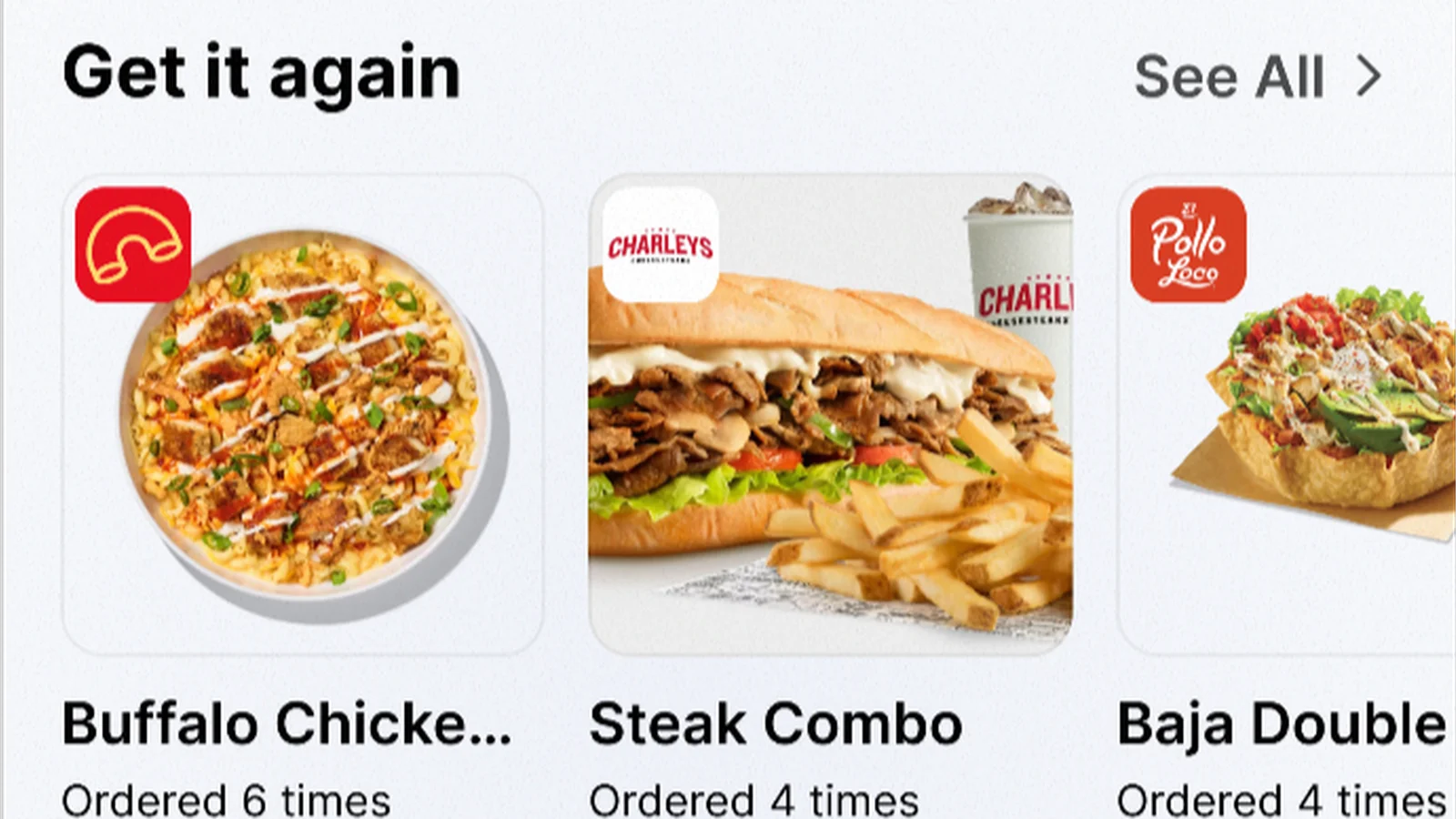
Inspired in part by Shopify, the system simplifies account access through an email address or mobile number and a one-time password. Guests can access saved information, including past orders, delivery addresses and payment methods, without having to create and remember separate logins for every restaurant.
The OLO app allows consumers to follow their favorite restaurants and create a personalized feed without sponsored ads or content. Nearby locations appear on a map, while saved payment information and delivery addresses make repeat ordering possible in just a few seconds.
The platform is designed to address a familiar consumer challenge: downloading and maintaining a separate app for every restaurant someone wants to order from.
It also provides an alternative to third-party marketplaces, where menu prices may be marked up. Olo said its app eliminates those pass-through menu-item markups, which the company estimates can account for average savings of 15% to 30%. Consumers ordering for pickup also can avoid delivery fees.
Room to grow
The Olo app also includes a roundup feature benefiting No Kid Hungry, the national campaign led by nonprofit Share Our Strength to end childhood hunger in the United States. Glass has served on the No Kid Hungry board for more than a decade.
At checkout, consumers can round up their purchases to the nearest dollar to support the campaign, connecting restaurant ordering with a cause that has long been important to Glass.
Looking ahead, he sees the network as a foundation for the next evolution of digital commerce: agentic ordering, in which consumers could ask an AI assistant to order lunch on their behalf.
But for now; he's relishing a 23-year-dream come to fruition.
"It's day one; it's going to be imperfect, but we'll listen to feedback, iterate quickly and improve over time," he said. "Don't judge us by what the app looks today; just us by the impact it has in 2030."
Related Media
Subscribe
Get the latest news and resources from Food Truck Operator.
Recent Posts


Recent Podcasts